Precision laboratory work requires concentration, stability, and consistent working posture. Whether you perform microscopic examinations, electronic component assembly, sample preparation, or quality inspections, your seating can directly influence comfort and productivity. Sitting in an unsuitable chair for extended periods may contribute to back discomfort, neck strain, shoulder tension, and fatigue. Choosing the right ergonomic laboratory chair helps you maintain proper posture while performing detailed tasks with greater control. To make an informed decision, you should evaluate adjustability, lumbar support, seat design, mobility, materials, and compatibility with your laboratory environment.
1. Evaluate Your Laboratory Work Requirements
Before selecting an ergonomic lab chair, identify the activities performed at your workstation. Different laboratory tasks require different seating characteristics.
For example, microscope examinations often involve prolonged sitting and forward-focused positioning. Sample preparation may require frequent movement between equipment, while precision assembly demands stable seating and controlled positioning.
Consider these factors:
Working duration: Determine how many hours employees spend sitting each day.
Task precision: Identify whether your work requires close visual inspection or delicate hand movements.
Workstation height: Check whether your chair accommodates laboratory benches and equipment.
Movement requirements: Decide whether swivel functionality or mobility is necessary.
Environmental conditions: Evaluate whether the chair must meet cleanroom or laboratory hygiene requirements.
Understanding these requirements helps you narrow down suitable seating options.
2. Choose Adjustable Seat Height
Seat-height adjustment is one of the most important features when selecting laboratory chairs for precision work. Your chair should allow you to position yourself comfortably in relation to the work surface.
Ideally, your feet should rest flat on the floor or an appropriate footrest, with your knees positioned comfortably. Your forearms should remain relaxed while working at the bench.
Look for chairs with:
- Smooth pneumatic height adjustment.
- A suitable adjustment range for your workstation.
- Stable positioning at different heights.
- An accessible adjustment mechanism.
If you work at elevated laboratory benches, consider a tall laboratory chair with a supportive foot ring. This helps provide additional stability when your feet cannot comfortably reach the floor.
3. Prioritize Lumbar Support and Backrest Design
Maintaining a comfortable spinal position is essential when performing detailed laboratory procedures. Without adequate back support, you may gradually lean forward or develop uncomfortable sitting habits.
Choose an ergonomic lab chair with a backrest that supports your lower back. Adjustable lumbar support can help accommodate different body shapes and sitting preferences.
Consider the following features:
- Contoured backrest design.
- Adjustable lumbar positioning.
- Supportive backrest materials.
- Suitable backrest height.
- Comfortable support without restricting movement.
For microscope work and other close-inspection activities, select a chair that supports your posture without interfering with your ability to approach the workstation.
4. Select the Right Seat Cushion and Dimensions
Seat design influences how comfortably you can work throughout the day. A poorly designed seat may create pressure points, restrict movement, and contribute to discomfort.
When evaluating laboratory seating, examine:
Seat width: Choose dimensions that accommodate different users comfortably.
Seat depth: Ensure the seat supports your thighs without pressing against the backs of your knees.
Cushioning: Select appropriate padding that provides support without excessive softness.
Seat edge: A waterfall-style front edge can help reduce pressure behind the thighs.
For precision applications, prioritize a seat that provides comfortable support while allowing controlled positioning close to your work surface.
5. Consider Cleanroom and Laboratory Compatibility
Not every ergonomic office chair is suitable for laboratory environments. Your seating materials and construction should match your facility’s cleanliness, chemical exposure, and maintenance requirements.
If you operate in a controlled environment, consider cleanroom-compatible laboratory chairs designed to support contamination-control procedures.
Evaluate:
- Easy-to-clean, nonporous surfaces.
- Durable upholstery or specialized seating materials.
- Low-particle-shedding construction where required.
- Chemical resistance appropriate to your application.
- Smooth surfaces with minimal dirt-collecting gaps.
- Compatibility with your facility’s cleaning and disinfection procedures.
For cleanroom applications, verify the chair’s documented suitability for the required cleanliness classification rather than relying on its appearance alone.
6. Check Armrests, Foot Rings, and Mobility
Armrests can improve comfort by supporting your forearms, but they should not restrict access to laboratory equipment.
For precision work, consider adjustable or removable armrests. They should allow you to move close to the bench while keeping your shoulders relaxed.
Other useful features include:
Adjustable foot rings: Provide stable foot support when using elevated laboratory chairs.
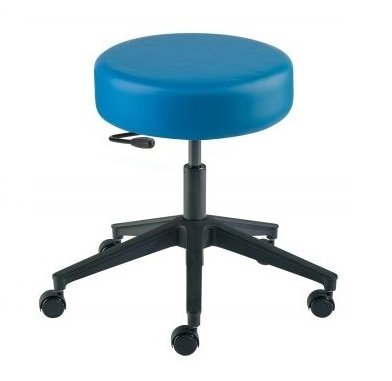
Five-star base: Helps maintain stability during seated work.
Suitable casters or glides: Allow movement appropriate to your flooring and workstation.
Locking mechanisms: Help prevent unwanted movement during delicate procedures.
Choose mobility features according to your task. A stable chair with glides may be preferable when controlled positioning is more important than frequent movement.
7. Assess Durability and Maintenance Requirements
Laboratory furniture must withstand regular use and routine cleaning. Before purchasing, examine the chair’s construction, upholstery, adjustment mechanisms, and weight capacity.
Prioritize durable frames, reliable pneumatic cylinders, strong bases, and surfaces compatible with your cleaning products.
You should also verify whether replacement components, maintenance support, and manufacturer warranties are available. These considerations help you evaluate long-term ownership costs rather than focusing exclusively on the initial purchase price.
8. Test the Chair at Your Actual Workstation
Product specifications provide useful information, but practical testing helps you determine whether a chair suits your working conditions.
If possible, arrange a trial with the intended users. Ask them to perform typical activities, including microscope inspection, pipetting, sample handling, and precision assembly.
During the evaluation, check:
- Can you adjust the seat to the correct working height?
- Can you maintain comfortable back support?
- Are your feet supported properly?
- Can you approach the bench without obstruction?
- Do the armrests interfere with your movements?
- Can you clean and maintain the chair easily?
Testing the chair in its actual environment helps identify problems that may not appear in product descriptions.
9. Choose Laboratory Chairs That Support Long-Term Productivity
The right laboratory seating should balance ergonomic support, operational stability, and environmental compatibility. You should also consider whether multiple employees will share the same chair and whether its adjustments accommodate different body sizes.
Explore the range of ergonomic laboratory chairs and adjustable cleanroom lab seating to compare seating options for different laboratory applications.
When evaluating suppliers, consider product specifications, customization possibilities, construction quality, and application requirements. CleaTech LLC offers laboratory and cleanroom equipment solutions to support specialized working environments.
Selecting appropriate seating is an investment in workplace comfort and efficient laboratory operations. By matching chair features to your tasks and workstation dimensions, you can create a more supportive environment for precision work.
Conclusion
Selecting ergonomic lab chairs for precision work requires more than choosing a comfortable seat. You must evaluate adjustable height, lumbar support, seat dimensions, foot support, armrest configuration, durability, and cleaning compatibility. Most importantly, match the chair to your actual laboratory activities and workstation design. A properly selected chair helps you maintain a supported posture, reduce avoidable ergonomic strain, and perform detailed tasks more comfortably.
For guidance on selecting suitable laboratory seating, Contact us today to discuss your laboratory furniture requirements.
Frequently Asked Questions
What features should you look for in ergonomic lab chairs?
Look for adjustable seat height, lumbar support, suitable seat depth, comfortable cushioning, adjustable foot rings, and durable, easy-to-clean materials. Choose features according to your workstation and laboratory environment.
Why is lumbar support important for laboratory seating?
Lumbar support helps maintain the natural curve of your lower back while sitting. It can improve sitting comfort and reduce the tendency to adopt unsupported postures during prolonged laboratory activities.
Are ergonomic laboratory chairs suitable for microscope work?
Yes. Adjustable laboratory chairs can support microscope work by allowing you to position your body comfortably relative to the instrument. Appropriate seat height, back support, and foot positioning are particularly important.
What materials are best for cleanroom lab chairs?
Nonporous, durable, and easy-to-clean materials are generally preferred. Your selection should meet the cleaning, chemical compatibility, particle-control, and contamination-control requirements of your specific facility.
How do you choose the correct height for a laboratory chair?
Measure your workstation height and compare it with the chair’s minimum and maximum seat-height range. Ensure that your feet remain supported and your arms can work comfortably without raising your shoulders.