Designing a laboratory workbench requires more than selecting a table that fits your available space. You need a workspace that supports your equipment, accommodates daily procedures, improves operator comfort, and maintains the cleanliness required for your application. When you plan around actual laboratory workflows, you can reduce unnecessary movement, organize instruments more effectively, and create a safer, more productive working environment.
Whether you manage a research laboratory, quality control facility, pharmaceutical workspace, or cleanroom, the right design begins with understanding how your team works and what your equipment requires.
Assess Your Laboratory Equipment Requirements
Start by listing every instrument, tool, and accessory that will occupy your workbench. Include analytical balances, microscopes, testing instruments, computers, power supplies, and other equipment used during routine procedures.
Record the dimensions, weight, operating requirements, and service clearances of each item. Some instruments require stable surfaces to minimize vibration, while others need electrical outlets, cable access, or room for ventilation.
Before selecting a bench, ask yourself:
- How much usable surface area does each instrument require?
- Does any equipment generate heat or vibration?
- Will operators need access to the back or sides of instruments?
- Do you need dedicated storage for tools and consumables?
- Will your equipment layout change as laboratory processes evolve?
These answers help you establish realistic workspace dimensions and avoid overcrowding.
Choose the Right Workbench Dimensions and Layout
Your workbench should accommodate equipment without restricting operator movement. Measure the available floor area, identify doors and walkways, and account for nearby cabinets, sinks, electrical connections, and other laboratory furniture.
A longer bench may accommodate multiple instruments, but it can also encourage inefficient layouts if operators must reach across equipment or move repeatedly between tasks. A modular arrangement may be more suitable when you need separate stations for preparation, testing, and documentation.
Consider these design factors:
Workbench length: Match the available surface to your equipment footprint and workflow.
Working depth: Provide enough room for instruments, samples, and safe hand movements.
Working height: Select a height appropriate for seated or standing tasks.
Legroom: Allow sufficient clearance when operators work while seated.
Accessibility: Keep frequently used tools and controls within comfortable reach.
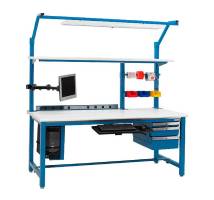
Explore the available laboratory workbench designs for organized equipment placement to identify configurations that suit your laboratory’s space and operational requirements.
Select a Surface Material That Matches Your Application
Your workbench surface must withstand the conditions of your laboratory. Material selection should reflect the chemicals you use, cleaning procedures, environmental conditions, and sensitivity of your work.
For example, stainless steel may be suitable for applications requiring a durable, cleanable surface. Phenolic resin surfaces may be appropriate for certain laboratory environments where chemical resistance is important. However, compatibility depends on the specific chemicals, concentrations, temperatures, and exposure durations involved.
When evaluating materials, consider:
Chemical compatibility: Confirm resistance to the substances used in your procedures.
Cleaning requirements: Check whether the surface tolerates your disinfectants and cleaning agents.
Durability: Assess resistance to scratches, impact, and everyday wear.
Contamination control: Choose a surface and construction that support your cleaning protocol.
Equipment stability: Verify that the surface can support the required load without excessive deflection.
If you operate in a cleanroom, also consider particle generation, exposed joints, and the ease of cleaning the complete workstation.
Design for Operator Comfort and Ergonomics
A well-designed laboratory workbench should support comfortable posture during repetitive and precision-based tasks. Poor positioning can contribute to neck, shoulder, wrist, and back discomfort, particularly when operators spend extended periods using microscopes, pipettes, or computer displays. Laboratory ergonomics guidance emphasizes matching workstation height, reach, and equipment placement to the task and user.
To improve operator comfort:
- Position frequently used instruments within easy reach.
- Match bench height to the task and whether the operator sits or stands.
- Provide suitable laboratory chairs or stools with appropriate adjustability.
- Position monitors to minimize neck twisting and forward bending.
- Use task lighting for detailed inspection, assembly, or measurement.
- Provide adequate knee and foot clearance for seated work.
If multiple operators share the same station, consider adjustable components or a layout that accommodates different working preferences.
Plan Electrical Connections, Utilities, and Storage
Equipment requirements should determine where you position electrical outlets, data connections, service lines, and storage components. Poor utility placement can create tangled cables, obstruct access, and complicate equipment maintenance.
Before finalizing your design, identify which instruments require dedicated power, compressed air, vacuum, water, or network connections. Confirm the relevant electrical and facility requirements with qualified professionals.
Organize storage according to frequency of use. Keep essential tools and consumables close to the working area, while locating less frequently used supplies in secondary storage. Avoid placing heavy equipment or supplies where operators must lift them awkwardly.
For additional flexibility, evaluate modular laboratory workbench configurations that allow storage, accessories, or workstation arrangements to change as your requirements evolve.
Consider Safety, Cleanliness, and Maintenance
Your workbench design should support the safety procedures and cleaning standards of your laboratory. Consider spill management, rounded or protected edges, accessible cleaning areas, and safe separation between incompatible activities.
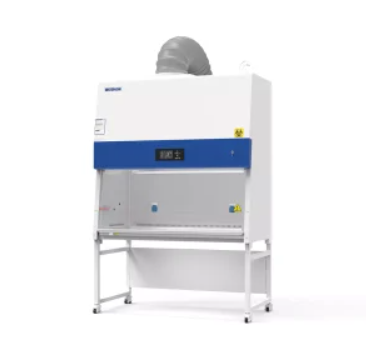
Do not use a general-purpose workbench as a substitute for specialized containment equipment. If your work involves hazardous chemical vapors, biological hazards, or other exposure risks, determine whether a suitable fume hood, biological safety cabinet, or other engineered control is required.
For cleanroom applications, prioritize surfaces and structural details that support the facility’s contamination-control procedures. Minimize difficult-to-clean gaps and confirm that materials tolerate the approved cleaning agents.
Also consider long-term maintenance. Accessible connections, replaceable components, and durable construction can simplify repairs and reduce disruption to laboratory operations.
Plan for Future Equipment and Workflow Changes
Laboratory requirements rarely remain constant. You may introduce new analytical instruments, expand testing capacity, or change sample preparation procedures.
Designing for future needs can help you avoid replacing an otherwise serviceable workstation. Consider modular storage, accessory mounting options, additional utility capacity where appropriate, and sufficient space for anticipated equipment.
Review your proposed design with laboratory personnel before purchasing. A practical evaluation should include equipment fit, load capacity, reach distances, cleaning access, and maintenance clearances.
When you are comparing options, CleaTech LLC laboratory equipment and workstation solutions can help you explore products for specialized laboratory environments. Choose your configuration according to your actual application rather than appearance alone.
Conclusion
Designing a laboratory workbench around equipment and operator needs requires a coordinated approach to dimensions, materials, ergonomics, utilities, safety, and future flexibility. When you evaluate these factors before purchasing, you can create a workspace that supports reliable procedures, efficient movement, and easier maintenance.
Start by documenting your equipment and workflow, then compare suitable lab workbench solutions for your laboratory application. For help evaluating your requirements, Contact us today to discuss your laboratory workstation needs.
Frequently Asked Questions
1. How do you design a lab workbench for specific equipment?
Measure each instrument’s footprint, weight, service clearance, and utility requirements. Arrange equipment according to workflow, ensuring operators have adequate working space and maintenance access.
2. What factors should you consider when choosing a laboratory workbench?
Consider dimensions, load capacity, surface material, chemical compatibility, ergonomics, utility connections, storage, cleaning requirements, and the potential for future changes.
3. Which material is best for a laboratory workbench?
The best material depends on your application. Stainless steel may suit cleanroom environments, epoxy resin may suit demanding chemical applications, and phenolic resin may work for certain general laboratory tasks. Always verify compatibility with your specific operating conditions.
4. How can you make a laboratory workbench more ergonomic?
Choose an appropriate working height, position frequently used instruments within comfortable reach, provide suitable seating, and arrange monitors and tools to minimize awkward postures.
5. Why should you choose a purpose-built laboratory workbench?
A purpose-built workbench can provide appropriate load support, application-specific surfaces, practical utility integration, and configurations designed for laboratory workflows. The right specification helps you manage equipment safely and maintain an organized workspace.