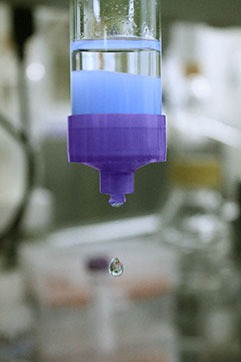
Preventing target protein leakage during resin loading is essential for achieving high protein recovery, maintaining sample purity, and ensuring consistent purification results. When your target protein passes through the column without binding, you may lose valuable material, reduce process efficiency, and increase downstream purification costs. This problem often develops because of unsuitable loading conditions, insufficient resin capacity, unfavorable buffer composition, or poor sample preparation.
To minimize protein loss, you need to understand how your target interacts with the affinity ligand and how different loading parameters influence binding performance. By controlling these variables, you can establish a reliable purification workflow that supports consistent target protein capture.
1. Understand Why Target Protein Leakage Occurs
Target protein leakage during resin loading happens when the protein does not bind effectively to the available affinity sites. Instead of remaining attached to the resin, the unbound protein travels through the column and appears in the flow-through fraction.
Several factors can contribute to this problem:
Insufficient binding capacity: The amount of target protein exceeds the available binding sites.
Incorrect buffer pH: The loading environment does not support effective protein-ligand interactions.
High ionic strength: Excessive salt concentration can weaken certain binding interactions.
Inappropriate flow rate: The sample moves through the resin too quickly for sufficient binding.
Competing substances: Contaminants or other sample components interfere with target capture.
Poor resin condition: Damaged, improperly stored, or repeatedly used resin may show reduced binding performance.
Identifying the underlying cause helps you select the right corrective action instead of changing multiple purification parameters without understanding their effects.
2. Select Resin With Suitable Binding Capacity
Your resin selection directly influences how effectively you capture the target protein. If the resin cannot accommodate your sample load, excess protein will remain unbound and leave through the flow-through fraction.
Before loading, estimate the total amount of target protein in your sample and compare it with the resin’s dynamic binding capacity under your intended operating conditions.
Consider these factors:
- Target protein concentration and total sample volume.
- Expected binding capacity under the selected buffer conditions.
- Resin ligand chemistry and target compatibility.
- Matrix characteristics and accessibility of binding sites.
- Recommended operating limits for the purification material.
Avoid relying exclusively on maximum static binding capacity. Dynamic binding capacity provides more practical information about performance under flowing conditions.
Choosing an appropriate Protein Purification Resin helps you establish suitable binding conditions and reduce target loss during sample application.
3. Maintain the Correct Loading Buffer Conditions
Buffer composition plays a major role in controlling protein-resin interactions. Even when you select a suitable affinity resin, incompatible buffer conditions can prevent effective target capture.
Start by evaluating the optimal pH range for your target protein and affinity ligand. For Protein A-based purification, for example, loading conditions generally need to support the interaction between Protein A and the Fc region of compatible antibodies.
Check the following parameters before loading:
pH: Maintain a pH that supports effective binding without compromising protein stability.
Salt concentration: Evaluate ionic strength because excessive salt can interfere with certain affinity interactions.
Buffer composition: Check whether detergents, reducing agents, chelating agents, or other additives affect binding.
Sample compatibility: Ensure that the sample buffer is suitable for the selected resin chemistry.
If your sample contains incompatible components, consider buffer exchange or desalting before purification. Test modified conditions using small-scale experiments before applying them to larger batches.
4. Control Sample Loading Flow Rate
Loading speed influences the time available for target proteins to interact with resin binding sites. When the sample moves too quickly through the column, some target molecules may leave before binding occurs.
To control leakage, begin with the recommended flow rate for your resin and column configuration.
Use these practical steps:
- Equilibrate the resin thoroughly before introducing your sample.
- Apply the sample at a controlled flow rate.
- Monitor the flow-through fraction for unbound target protein.
- Reduce the flow rate if breakthrough occurs prematurely.
- Compare protein recovery across different loading conditions.
For larger purification processes, evaluate residence time and dynamic binding capacity together. This helps you identify loading conditions that balance binding efficiency with processing time.
5. Prepare Your Sample Before Resin Loading
Sample preparation can significantly affect purification performance. Crude or poorly clarified samples may contain cellular debris, nucleic acids, aggregates, and other contaminants that interfere with resin accessibility.
Before loading, consider the following preparation steps:
- Centrifuge samples to remove insoluble material.
- Filter samples when compatible with target protein stability and sample characteristics.
- Reduce sample viscosity where possible.
- Remove interfering buffer components through desalting or buffer exchange.
- Check for protein aggregation before purification.
High sample viscosity can create uneven flow distribution and increase the likelihood of inefficient resin utilization.
Proper sample preparation allows the target protein to access available binding sites more consistently, reducing unnecessary losses during loading.
6. Monitor Flow-Through Fractions for Early Leakage
One of the most effective ways to identify loading problems is to analyze the flow-through fraction.
Instead of assuming that your target protein has bound successfully, collect small fractions during sample application and evaluate their protein content.
Useful analytical methods include:
- SDS-PAGE for identifying target protein bands.
- Western blotting for target-specific detection.
- UV absorbance monitoring when appropriate.
- Protein concentration assays for quantitative comparisons.
If target protein appears in early flow-through fractions, investigate buffer compatibility, loading speed, and resin condition.
If leakage increases toward the end of loading, resin saturation may be responsible. In this situation, reduce the sample load, increase resin volume, or divide the sample into multiple loading cycles.
7. Evaluate Resin Reusability and Storage Conditions
Repeated resin use can influence binding performance, particularly when cleaning and storage procedures are not properly controlled.
Residual contaminants, incomplete regeneration, ligand deterioration, and unsuitable storage conditions may reduce effective binding capacity.
To maintain consistent performance:
- Follow the manufacturer’s cleaning and regeneration instructions.
- Avoid exceeding recommended cleaning conditions.
- Store resin in the specified storage solution.
- Prevent microbial contamination.
- Monitor binding performance across purification cycles.
- Replace resin when performance no longer meets acceptance criteria.
You should also establish internal performance benchmarks to identify gradual changes in binding capacity before they significantly affect protein recovery.
8. Establish a Consistent Protein Loading Workflow
A standardized loading procedure makes it easier to identify variations and maintain reproducible purification outcomes.
Document important parameters, including resin volume, sample concentration, buffer composition, pH, conductivity, flow rate, and loading duration.
Run small-scale binding studies before increasing process volume. Compare target protein recovery, purity, and breakthrough behavior across different conditions.
When you need dependable affinity purification materials and technical guidance, Lytic Solutions, LLC provides molecular biology tools and affinity reagents for protein purification applications.
Selecting appropriate materials and validating your loading conditions can help reduce target protein leakage while supporting reliable downstream analysis.
If you need assistance selecting suitable purification materials or evaluating your workflow, Contact us today to discuss your application requirements.
Frequently Asked Questions
1. Why does target protein leak during resin loading?
Target protein leakage generally occurs when binding conditions are unsuitable, resin capacity is insufficient, or sample flow is too fast. Incompatible buffer composition and sample contaminants can also reduce binding efficiency.
2. How can you reduce protein loss during resin loading?
You can reduce protein loss by selecting suitable resin capacity, maintaining compatible buffer conditions, controlling flow rate, preparing samples properly, and monitoring flow-through fractions for unbound target protein.
3. Does resin binding capacity affect target protein leakage?
Yes. When the target protein quantity exceeds the available binding capacity, excess molecules cannot attach to the resin and leave through the flow-through fraction.
4. What is the ideal flow rate for protein purification resin loading?
The ideal flow rate depends on resin chemistry, particle characteristics, column dimensions, and target protein properties. Follow manufacturer recommendations and evaluate breakthrough under your actual operating conditions.
5. How does buffer pH influence protein binding?
Buffer pH affects protein structure, ligand interactions, and binding behavior. An unsuitable pH can weaken affinity interactions or destabilize the target protein, increasing leakage.
6. Can high salt concentration cause protein leakage?
It can. Depending on the affinity interaction, excessive salt may weaken binding. However, the effect varies with resin chemistry, so you should evaluate salt concentration experimentally.
7. How do you detect unbound target protein during loading?
Collect flow-through fractions and analyze them using SDS-PAGE, Western blotting, or suitable protein quantification methods. These tests help identify breakthrough and estimate target protein loss.
8. Why should you clarify samples before resin loading?
Sample clarification removes cellular debris, insoluble aggregates, and other particles that can obstruct resin accessibility, increase backpressure, and interfere with consistent protein binding.
9. When should you increase resin volume?
Increase resin volume when the target protein load exceeds the effective binding capacity or when breakthrough occurs despite suitable buffer and flow conditions. Confirm the cause through small-scale testing.
10. How often should you evaluate resin binding performance?
Evaluate binding performance during initial method development, after significant process changes, and periodically during repeated resin use. Monitor capacity, breakthrough, and protein recovery to identify performance deterioration.