
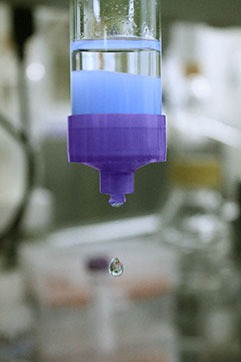
Selecting the right Protein A resin can make a significant difference in antibody purification, recovery, and product quality. When you compare resins for Fc region recognition, you need to evaluate more than binding capacity alone. Ligand structure, antibody compatibility, operating conditions, selectivity, and resin stability all influence performance. By assessing these factors systematically, you can choose a resin that captures your target antibody efficiently while supporting consistent purification results across laboratory and production workflows.
Understand How Protein A Recognizes the Fc Region
Protein A is a bacterial protein commonly used as an affinity ligand for purifying immunoglobulin G (IgG). It binds to specific sites within the Fc region of compatible antibodies, allowing you to separate your target antibody from many unwanted proteins in a sample.
However, Fc recognition varies with antibody species, subclass, and molecular structure. Human IgG subclasses, for example, do not all interact with Protein A with identical affinity. Some antibodies from other species may also show weaker binding or different compatibility.
Before comparing resins, identify your antibody’s species, subclass, and intended application. This information helps you determine whether Protein A is suitable or whether another affinity ligand would better meet your purification requirements.
Compare Ligand Chemistry and Fc Binding Performance
The Protein A ligand determines how effectively a resin recognizes and captures compatible antibodies. Different resin products may use native Protein A, engineered Protein A variants, or modified ligands designed to improve stability or binding performance.
When evaluating Protein A Resins for selective Fc region recognition and antibody purification, consider the following characteristics:
Binding affinity: Strong, specific interactions help retain compatible antibodies during sample loading and washing.
Ligand density: The amount of immobilized Protein A can influence the resin’s binding capacity, although higher density does not automatically guarantee better performance.
Ligand accessibility: Immobilization chemistry and ligand orientation affect whether antibodies can reach the binding sites.
Ligand stability: A stable ligand can help maintain performance during repeated cleaning and regeneration cycles.
Review technical data sheets to compare these properties under similar test conditions. Avoid ranking resins solely by advertised capacity because differences in antibody concentration, flow rate, and measurement methods can make direct comparisons misleading.
Evaluate Dynamic Binding Capacity
Dynamic binding capacity (DBC) indicates how much antibody a resin can capture under specified flow conditions before the target begins to break through the column. It provides a practical measure of performance during chromatographic purification.
When comparing DBC values, check whether manufacturers used comparable residence times, feed concentrations, buffers, and breakthrough criteria. A resin tested under slower flow conditions may report a higher capacity than the same material tested under faster conditions.
You should also consider your expected sample load. A resin with suitable capacity can reduce the required column volume, improve processing efficiency, and help control purification costs.
For meaningful comparisons, test candidate resins using the same antibody feed and operating conditions whenever possible. This approach reveals which material performs best in your actual workflow rather than under conditions that may not reflect your process.
Assess Agarose Matrix Structure and Flow Properties
The resin’s support matrix influences mass transfer, pressure, and overall chromatographic efficiency. Agarose-based matrices are widely used because their porous structure supports antibody capture while allowing proteins to move through the stationary phase.
When comparing matrix properties, evaluate:
Particle size: Smaller particles can improve separation efficiency but may increase backpressure.
Pore structure: Appropriate pore accessibility helps antibodies reach immobilized Protein A binding sites.
Mechanical strength: A robust matrix supports consistent flow and repeated processing.
Flow characteristics: Suitable flow properties help you balance processing speed and binding efficiency.
Choose a matrix that matches your equipment, sample volume, and desired throughput. A resin with excellent Fc recognition may still perform poorly if its flow properties do not suit your column or operating conditions.
Examine Elution Conditions and Antibody Recovery
After binding, you must release the captured antibody without compromising its quality. Protein A chromatography commonly uses acidic elution conditions to disrupt the interaction between the ligand and the antibody’s Fc region.
However, exposure to low pH can promote aggregation or structural changes in sensitive antibodies. Therefore, compare resins based on their ability to support efficient elution, high product recovery, and acceptable antibody integrity.
During evaluation, monitor:
- Elution pH and the duration of low-pH exposure.
- Antibody recovery and product concentration.
- Aggregation and fragmentation after purification.
- Residual Protein A ligand in the collected product.
- Compatibility with your downstream neutralization and polishing steps.
A resin that binds strongly but releases the antibody inefficiently may increase processing time or reduce overall yield. Test the complete binding, washing, and elution cycle rather than judging Fc recognition in isolation. Ligand leakage and resin stability should also be considered when evaluating repeated use.
Compare Cleaning Stability and Resin Lifetime
If you plan to reuse a resin, cleaning-in-place (CIP) compatibility is an important selection criterion. Repeated cleaning can affect ligand integrity, matrix properties, and binding performance.
Review the manufacturer’s recommended cleaning conditions, pH stability, and expected operating lifetime. Then assess whether the resin maintains consistent capacity and recovery across repeated cycles.
Track dynamic binding capacity, pressure changes, antibody yield, and ligand leakage during routine performance checks. A resin with a longer usable lifetime may reduce replacement frequency and lower the cost per purification cycle.
Do not assume every resin tolerates the same cleaning conditions. Follow product-specific instructions and validate your cleaning procedure before routine use.
Run a Side-by-Side Resin Comparison
The most reliable way to compare Protein A resins is to test them under equivalent conditions using your target antibody.
Prepare a small screening study with the same feedstock, sample load, buffer composition, residence time, and elution procedure for each candidate. Record the results in a comparison table.
| Performance measure | What you should evaluate |
| Fc binding | Antibody capture and breakthrough |
| Dynamic binding capacity | Usable capacity at a defined breakthrough level |
| Recovery | Percentage of loaded antibody recovered |
| Purity | Remaining host-cell proteins and other impurities |
| Product quality | Aggregation and antibody integrity |
| Resin durability | Capacity retention after repeated cycles |
| Operating cost | Cost per usable purification cycle |
Use these results to identify the resin that best meets your process requirements. High binding capacity alone should not outweigh poor recovery, unacceptable product quality, or limited cleaning stability.
For additional guidance on affinity purification materials, visit Lytic Solutions, LLC and review the available Protein A Resins for antibody purification and Fc-binding applications.
If you need help identifying a suitable material for your workflow, contact us today to discuss your purification requirements.
Conclusion
Comparing Protein A resins for Fc region recognition requires a balanced assessment of ligand chemistry, antibody compatibility, dynamic binding capacity, matrix structure, elution performance, and resin lifetime. By testing candidate materials under consistent conditions, you can identify a resin that supports reliable antibody capture, effective recovery, and reproducible purification. Focus on your target antibody and intended application to make a practical, evidence-based selection.
Frequently Asked Questions
1. What is the role of Protein A resins in Fc region recognition?
Protein A resins use immobilized Protein A ligands to bind compatible antibodies through their Fc regions, enabling selective capture during affinity chromatography.
2. How do you compare Protein A resins for antibody purification?
Compare Fc-binding compatibility, dynamic binding capacity, recovery, purity, elution performance, cleaning stability, and cost under equivalent experimental conditions.
3. Does higher ligand density always improve Fc binding?
No. Higher ligand density may increase capacity, but ligand accessibility, orientation, antibody compatibility, and mass-transfer limitations also influence binding performance.
4. Why does antibody subclass matter when selecting Protein A resin?
Different antibody species and subclasses can show different binding strengths. Confirm compatibility with your specific antibody before choosing a resin.
5. What is dynamic binding capacity in Protein A chromatography?
Dynamic binding capacity measures how much antibody a resin captures under defined flow conditions before a specified level of target protein appears in the flow-through.
6. How does flow rate affect Protein A resin performance?
Higher flow rates reduce residence time and may lower dynamic binding capacity because antibodies have less time to interact with accessible ligand sites.
7. Can Protein A resins be reused?
Yes, many Protein A resins support repeated use when cleaned according to manufacturer instructions. Monitor capacity, recovery, pressure, and ligand leakage over successive cycles.
8. Why is elution pH important for Fc-based antibody purification?
Elution pH affects antibody release from the Protein A ligand. Excessive low-pH exposure can damage sensitive antibodies or promote aggregation, so conditions require validation.
9. How can you evaluate Protein A resin ligand leakage?
Measure residual Protein A in the eluate using a suitable validated analytical method and assess whether the results meet your process requirements.
10. Which factors matter most when selecting Protein A resins?
Prioritize antibody compatibility, binding capacity, product recovery, purity, stability, cleaning requirements, and total operating cost for your specific purification workflow.


