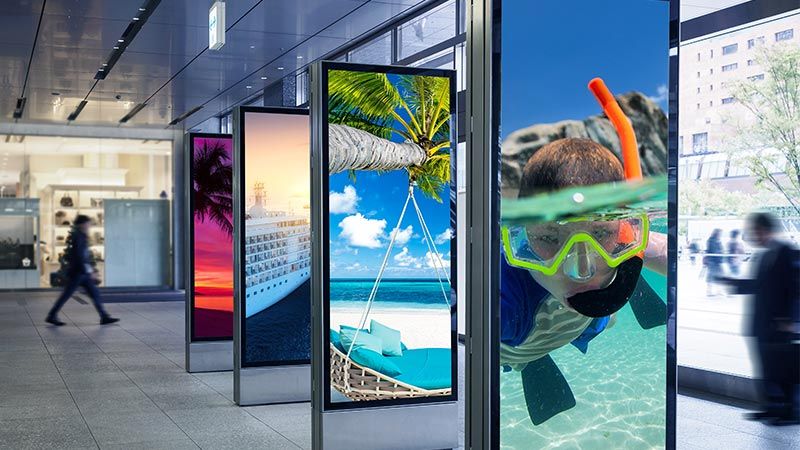
Traditional printed signs still do their job in stores: they attract foot traffic from the outside, guide customers around the store and influence consumer behavior. However, they can’t offer as many opportunities as digital signs do.
Digital signage solutions actually do the same tasks, but at a wider scale and with better results. Let’s see how retailers use digital signage in physical stores.
1. Make Shop Windows More Attractive
In the world of physical retail stores, shop-windows play a crucial role in converting passers-by to customers. Used correctly, a store window is a powerful tool that sparks interest and convinces people to come inside and explore the product offering.
Retailers using digital signage screens create more engaging shop-windows compared to those who use printed signs and banners. The reason is that printed signs are static and a great deal of time and effort is required to update information on them. On the contrary, digital signage screens are dynamic and can easily catch the eye of passers-by.
Text scrolling signboards, video and audio content convey more information within a short time interval. Information in these formats is easy to digest and can quickly influence consumer behavior.
In addition, digital signage allows retailers to display only relevant content in their windows, since they can easily update or change it via a centralized software platform. For example, they can display discounts for specific products and change them every day.
2. Tell the Brand Story
People like exciting and fascinating business success stories. With traditional printed signage, retailers of the past had no opportunity to share their brand stories in public places. With retail digital signage, they are not limited by space or content formats.
An appealing video, an interview with the owners or partners, interactive infographics — any idea can be implemented and presented to the audience both inside and outside stores.
As you know, customers form an opinion about retailers not only based on the company’s products. They want to be aware of the brand identity, policy, goals and intentions; they want to hear its success story. By telling your story via digital signage screens, you make it memorable and engaging.
Such a connection with brands helps customers build loyalty and keeps them coming back to your store.
3. Promote Products and Services
Sales assistants in brick-and-mortar stores can answer any questions concerning product characteristics, usage, benefits, etc. However, the process is inefficient in large retail stores or hypermarkets: it’s physically impossible for human assistants to provide sufficient information to dozens of clients at a time. In addition, sales assistants may get bored answering the same questions again and again, which results in reduced motivation, missed details and reduced customer satisfaction.
Indoor interactive kiosks, tablets, or digital screens in stores can provide loads of useful information about goods on offer, including their physical parameters, configuration options, product comparison, video instructions and even testimonials by happy clients.
This way, retailers free up staff members for more important tasks and at the same time improve customer experience.
Another function that digital signage solutions can take over in retail stores is cross-selling and upselling. Using content management software with AI algorithms, marketers can create campaigns for promoting add-on items and products from related areas. For example, if a customer looks into buying a specific bicycle model, the program can also suggest options for pumps, locks, helmets, and other accessories.
In conclusion, you don’t need to have more sales assistants on the floor to increase sales.
4. Communicate with Customers
Digital signage is an efficient communication channel for keeping retail customers updated. Using digital screens, store owners can make announcements concerning the work of stores, company news, sales and discounts, current marketing trends and other urgent information.
In-store customer support can also be organized with retail digital signage solutions, which may include:
answers to FAQs
product catalogs
wayfinding plans
video manuals and case studies for products
connection to a customer service specialist for additional assistance.
This type of virtual support makes the in-store buying process pleasant and seamless.
5. Leverage Digital Marketing Content in Stores
Many companies in the commerce industry today provide an omnichannel experience, allowing buyers to interact with them through different touchpoints. Hence, there is no need to strictly differentiate brick-and-mortar and online shopping experiences. On the contrary, digital marketing content can be efficiently used in physical retail stores with the help of digital signage.
For example, you can display the content from your social media channels, such as testimonial video or product presentations, on digital screens in your physical shops. This way, you’ll provide additional value for your in-store visitors and significantly enhance your marketing strategy.