The modern workplace is evolving, and with it comes the challenge of engaging deskless workers effectively. Deskless employees, who often operate in dynamic and dispersed environments, require innovative solutions to foster communication, collaboration, and a sense of belonging. Digital signage software has emerged as a powerful tool to address these challenges, providing a platform for real-time communication and information dissemination. We explore important strategies to enhance the engagement of deskless workers using digital signage software.
Dynamic Content Delivery:
One of the key advantages of digital signage is the ability to deliver dynamic and visually appealing content. Engaging visuals capture attention more effectively than static text, making it essential for deskless workers who may have limited time to consume information. Incorporating multimedia elements such as videos, images, and interactive content can significantly enhance the overall engagement and retention of information.
Personalized Communication:
Tailoring messages to specific teams or individuals helps deskless workers feel more connected and relevant to the information being shared. Digital signage software often allows for content customization based on roles, departments, or locations. By delivering personalized content, organizations can ensure that each employee receives information that is directly relevant to their responsibilities and enhances their overall work experience.
Real-Time Updates:
Deskless workers need access to up-to-date information, and digital signage excels in providing real-time updates. Whether it’s shift schedules, operational changes, or safety protocols, timely information is crucial. Digital signage enables organizations to push instant updates, ensuring that deskless workers are always well-informed and able to adapt to rapidly changing circumstances.
Interactive Features:
Promoting engagement goes beyond passive content consumption. Integrating interactive features into digital signage, such as surveys, quizzes, or touch-screen interfaces, encourages active participation. This not only enhances information retention but also fosters a sense of involvement and ownership among deskless workers.
Mobile Accessibility:
Recognizing the mobility of deskless workers, digital signage solutions should be accessible via mobile devices. This ensures that employees can stay connected regardless of their location, enabling them to access critical information even when away from their desks. Mobile compatibility enhances the convenience and effectiveness of digital signage as a communication tool.
Recognition and Feedback:
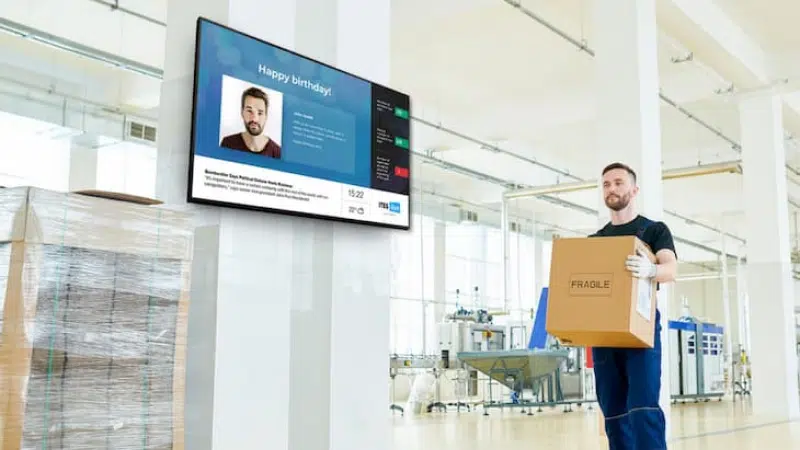
Acknowledging the contributions of deskless workers is vital for boosting morale and engagement. Digital signage can be used to display achievements, milestones, and recognition messages, fostering a positive work environment. Additionally, incorporating mechanisms for feedback allows employees to express their opinions and concerns, promoting a two-way communication flow.
Training and Development Opportunities:
Deskless workers often face challenges in accessing training and development programs. Digital signage can be leveraged to deliver bite-sized training modules, safety protocols, and important updates on procedures. This not only enhances skill development but also ensures that deskless workers are well-equipped to perform their tasks efficiently.
Data-Driven Insights:
Digital signage software often comes with analytics capabilities that provide valuable insights into employee engagement and content effectiveness. By analyzing data on content interactions, organizations can refine their communication strategies, ensuring that the information presented is relevant and resonates with deskless workers.
Integration with Existing Systems:
To maximize the impact of digital signage, it should seamlessly integrate with existing communication and workflow systems. Integration ensures that deskless workers can access information without disruptions in their daily routines, enhancing the overall efficiency of communication processes.
Continuous Improvement:
Engaging deskless workers is an ongoing process that requires continuous improvement. Regularly assessing the effectiveness of digital signage initiatives, soliciting feedback, and staying attuned to the evolving needs of deskless employees ensures that the communication strategy remains relevant and impactful.
Conclusion:
In the ever-evolving landscape of deskless work, digital signage software stands out as a versatile and powerful tool for enhancing engagement. By embracing dynamic content delivery, personalization, real-time updates, interactivity, and other strategies, organizations can create a more connected and informed workforce. As technology continues to advance, the integration of digital signage into the workplace represents a forward-looking approach to addressing the unique communication challenges faced by deskless workers.